Tuesday, October 15, 2019

10/15: Psychological Effects of the Net and Web

Class

1. Report on Turkle

2. Watching and reflecting: Alter, “Why our screens make us less happy.” https://www.ted.com/talks/adam_alter_why_our_screens_make_us_less_happy

3.  Wiki Reports

4. Reading Orwell, Nineteen Eighty-Four.

For next class
Read and take notes for Orwell, Nineteen Eighty-Four. Chapter 1 The reporters will be Abhay, Luis, and Ana

Thursday, October 10, 2019

Wikipedia Editing Workshop, part II

By the end of the class, you will have published your section(s) for Woodside and Hunters Point Library. Tomorrow the St. Pete's students will take a look at your work and make suggestions.

We will also look at their article closely and make some suggestions on the Talk page: https://en.wikipedia.org/wiki/Russian_LGBT_Network


I. Woodside
1. Images of Woodside--both what is in Wikimedia Commons and what you take yourselves. Rachel and Ana
2. Edit section on Little Manila on article as well as in the article  Filipinos in the New York metropolitan area Andrea and Felicia
3. Edit section on St. Pat's For All, with the option of creating a separate article later: Stephanie, Brianna, and Castor
  • If anyone wants to translate the article once we have posted it, let me know
4. Images of St. Pat's For All--both what is in Wikimedia Commons and what the LaGuardia Archives provides: Stephanie, Brianna, and Castor, Nat, and Linda
5. Edit section on Big Bush Park and Lawrence Virgilio Playground: Felicia and Simon
6. Edit  Moore-Jackson Cemetery (and link back to Woodside) to include more/recent sources (2 people): Joselynn and Giovanni
7.  Create a full article for Woodside in Wikivoyage: Angel, Abhay, Luis and Jonathan
II. Long Island City Hunter's Point Community Library
Edit section to include history and issues Ladie and Gianna

For next Tuesday:
Read/watch: Turkle, “Connected but Alone?”  https://www.ted.com/talks/sherry_turkle_alone_together?language=en

Tuesday, October 1, 2019

Wikipedia Editing Workshop

In Class
1. Returning/collecting  Essay 1, Part I. Collecting homework
2. Watching Alex's video and setting up 6 teams to respond to St. Pete's videos: https://flipgrid.com/s/657873e905f9
3. In the spirit of Aaron Swartz Guerrilla Open Access Manifesto, we will search our databases for articles to help our sister calls in St. Petersburg. I am taking two volunteers to compile this information to send along. 
4. Choosing editing tasks/beginning work in Sandboxes:

I. Woodside
1. Images of Woodside--both what is in Wikimedia Commons and what you take yourselves (2 people)
2. Edit section on Little Manila on article as well as in the article  Filipinos in the New York metropolitan area (2 people) 
3. Edit section on St. Pat's For All, with the option of creating a separate article later (4 people)
  • If anyone wants to translate the article once we have posted it, let me know
4. Images of St. Pat's For All--both what is in Wikimedia Commons and what the LaGuardia Archives provides (2 people)
5. Edit section on Big Bush Park and Lawrence Virgilio Playground (2 people)
6. Edit  Moore-Jackson Cemetery (and link back to Woodside) to include more/recent sources (2 people)
7.  Create a full article for Woodside in Wikivoyage (4 people)
II. Long Island City Hunter's Point Community Library
Edit section to include history and issues (2 people)

Sources to Use:   https://docs.google.com/document/d/1Gpr3pT0rNfpWhgMbfallpU53nwrxQqjqciRQApfKBwA/edit?usp=sharing

For Tuesday's Class

If you are working with TEXT, bring a printout of what you want to add, even if you are working in your Wikipedia sandbox. If you are working with IMAGES, bring them so you can show them to your team. Teams will get together to decide what they will post in the article. 

Thursday, September 26, 2019

Wikipedia Workshop

Black Lunch Table's Wikipedia Editathon for We Wanted A Revolution: Black Radical Women 1965-85 at the Brooklyn Museum
By Blacklunchtable - Own work, CC BY-SA 4.0
 https://commons.wikimedia.org/w/index.php?curid=60878028

Today's Tasks

  1. Responding to St. Pete's students via FlipGrid video 
  2. Joining the WikiEdu class 
    1. https://dashboard.wikiedu.org/  
    2. https://dashboard.wikiedu.org/courses/LaGuardia_Community_College_-_St._Peter's_Polytechnic_University/ENG-A_101_English_Composition_(COIL)_(Fall_2019)?enroll=gzjfcqoe
  3. Creating your Wikipedia userpage
  4. Evaluating the article for Woodside, Queens by
    1. looking at other similar articles
    2. comparing with other sources on Woodside on the Surface Web and on the Deep Web (and learning about the LaGuardia databases in the process)
For Next Class
Write a paragraph arguing what to edit and create related to the Woodside article. Identify 1-3 tasks you could/want to do as part of the project.

ENA section
We will practice editing by adding information on the new Hunters Point Community Library to the Long Island City article using these sources:

Monday, September 23, 2019

9/24: Knowledge Production and the Hacker Ethic

Class

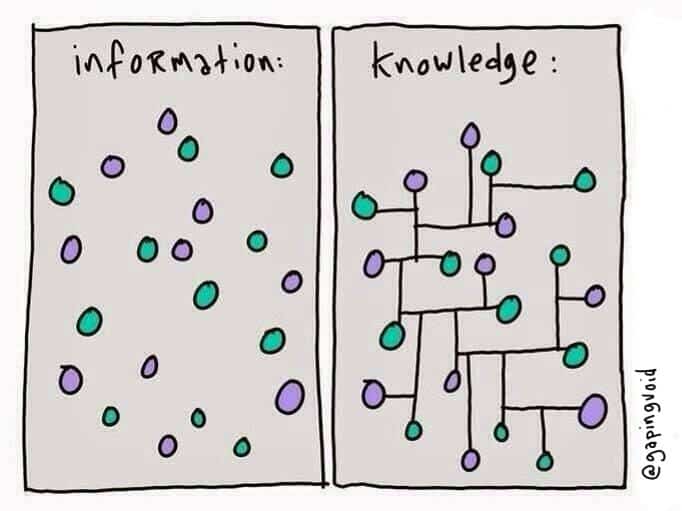
Essential questions: How is knowledge produced? Whose knowledge is disseminated? Who benefits from this system? What is your place in the knowledge society? 

A. Answering the questions for the FlipGrid Icebreaker:   https://docs.google.com/document/d/16QARu8CiFtmO7hobQh0AYrq_ZL66GxqcvuT5XYPV2o/edit?usp=sharing

B. Consider: Information Society versus Knowledge Society    https://en.wikipedia.org/wiki/Knowledge_society

C. Consider: The Production of Knowledge
 http://camellia.shc.edu/literacy/tablesversion/lessons/lesson1/production.htm

D. Consider: Information Privilege
File:AaronSwartzPIPA.jpg
Aaron Swartz speaking at a protest against the Stop Online Piracy Act
Source: Wikipedia

1. What information resources do you have access to by virtue of your institutional affiliation to LaGuardia/CUNY that others do not? 
2. What are the potential effects of the “information divide” for those who find themselves on either side of it? See, for instance http://www.pewresearch.org/fact-tank/2018/10/26/nearly-one-in-five-teens-cant-always-finish-their-homework-because-of-the-digital-divide/ 
3. What are the structures that perpetuate this system, and what can challenge these structures? 
4. What responsibilities (if any) do you think are associated with privileged access to information?

E. Consider: How does hacker ethic revise our understanding of knowledge production?
https://docs.google.com/presentation/d/1YujAD3gm3rS54aY__DeS9-oiE-SNAhTlJvRw8HjqF_c/edit?usp=sharing

F. Introduction to Wikipedia. Reports on Wales

G. Introduction to our project:

Further reading
For next class

Thursday, September 19, 2019

9/19: How the World Wide Web Has Changed


Class

1. Turn in Essay 1, Part I
2. Reports on Bartlett and the ACLU


3. Define (in teams of three) what the Web is and how it works by answering "What is.....?"
  1. a browser
  2. a search engine
  3. a server
  4. a protocol
  5. a path
  6. an IP address
  7. the cloud
  8. hyperlink(ing)
4. Comprehend: The Types of Web:
5. Comprehend: The Development of the Web
  • Web 1.0: Static, hyperlinked pages such as Internet Shakespeare Editions
  • Web 2.0: Interactive pages, such as Wikipedia, Facebook, Amazon.com
  • In the works: Web 3.0: Categorized web that "learns" about itself and its users (also called Semantic Web)

6. Introducing COIL and creating videos to introduce ourselves to the St. Petersburg students on FlipGrid: https://flipgrid.com/26b2fcbb

For next class

  • Read Swartz, “Guerrilla Open Access Manifesto” and Wales,” The Birth of Wikipedia” 
  • Everyone do the 7 Ws for Berners-Lee, "The next web": https://youtu.be/Wp0ldLwI0iU


Tuesday, September 17, 2019

9/17: History and Definition of the Internet and the World Wide Web

Essential question:
  • How does the online world work and how has it changed since its inception?
Class

The Internet
Reports on Rosenzweig: The 7Ws.

The World Wide Web
Watch: Camp, “What is the World Wide Web?” https://ed.ted.com/lessons/what-is-the-world-wide-web-twila-camp

Listen/Read/Annotate/Discuss/ Complete 7Ws: Berners-Lee, “How Did The World Wide Web Start?” (TED Radio Hour podcast and transcript) https://www.npr.org/2015/10/23/449180060/how-did-the-world-wide-web-start

  • What is the main point of the interview? How does the story of Gopher help make that point? 

Planning the Icebreaker for our Wikipedia work with the students of Peter the Great


For next class

Finish the first part of Essay 1

Read/Listen

 1. “How the Web Works-In One Easy Lesson.” http://mkcohen.com/how-the-web-works-in-one-easy-lesson

2. Bartlett, “What Goes On In The Secrecy of The Dark Web?” (TED Radio Hour podcast and transcript) https://www.npr.org/2017/12/15/570797404/jamie-bartlett-what-goes-on-in-the-secrecy-of-the-dark-web

3. Definitions: Web 2.0, Web 3.0, Internet of Things (forgot to give you this)

4. ACLU. “Net Neutrality”